
Nature, a Need in Our Lives
Biodiversity: an incredible network of life
On Earth, there is an extraordinary variety of ecosystems. From the vast ocean to the small pond, from the tropical forest to the private garden, millions of living species evolve within these ecosystems. Scientists have cataloged nearly 2 million species. According to a study published in 2011 in PLOS Biology, researchers estimate that there are over 8.7 million living species in total, many of which are yet to be discovered. This incredible number clearly demonstrates the richness of life on Earth.

As humans, we depend on this network of life. Furthermore, we are an integral part of it. It provides us with food, purifies the air we breathe, filters the water we drink, and contributes to our mental and physical well-being. But despite these vital, economic, and moral issues, it is clear that Nature and biodiversity are currently under threat.
threat.
The Main Threats and Their Impact on Biodiversity
There are five major causes contributing to biodiversity loss and ecosystem collapse:
- Destruction and fragmentation of natural habitats (both terrestrial and aquatic)
- Overexploitation of natural resources
- Climate change
- Pollution
- Spread of invasive alien species
Each of these is unfortunately a consequence of human activity, and their impact is undeniable:
- Over the last 4 decades, the global population of wild animals has decreased by 60%.
- 3/4 of the Earth’s surface has been altered, drastically reducing the share of nature in favor of cities, roads, fields, etc.
- The alteration of species’ distribution areas also impacts our economy:
- From 1997 to 2011, we lost between 3.5 and 18.5 trillion euros annually in ecosystem services (services typically provided by nature, such as protection against floods, heatwaves, etc.).
- Land degradation alone would cost between 5.5 and 10.5 trillion euros (reduced crop yields, lower fish catches, etc.).
Business and Biodiversity: An Intrinsic and Beneficial Relationship
So, what role do businesses play in all of this? Why is it so important for them to integrate biodiversity into their actions? Simply because business and biodiversity are intimately connected.
Through their activities, access to and use of natural resources, companies often have a negative impact on biodiversity and ecosystem services. This impact varies depending on the industry and can occur at locations geographically distant from the company. However, the relationship between the two is not one-way street. In fact, biodiversity also provides many services to the business world. It supplies the inputs necessary for business activities (energy, materials, etc.) and offers direct economic benefits that contribute to economic recovery.
For companies, integrating biodiversity preservation into their CSR* policy is not just an environmental, moral, and societal issue, but also an economic one.
*CSR (Corporate Social Responsibility) is defined as the voluntary integration of social and environmental concerns into business activities and stakeholder relations, contributing to sustainable development goals.
5 Actions to Preserve and Strengthen Biodiversity on Your Site
What solutions can businesses implement to conserve biodiversity and make their activities more sustainable? There are, of course, many of them. We offer you 5 tips for a company that serves biodiversity.
1. Understanding Local Biodiversity
To protect, you must first be informed. Learn about the biodiversity zones and the status of the species living around your site. If some species are protected (such as hedgehogs, the Marsh fritillary, or the Black woodpecker), you must be aware in order to take appropriate action. Similarly, if the municipality or city where you live has specific regulations, you will need to adapt your site management strategy to the current standards. To identify the biodiversity issues in and around your site, it is necessary to carry out an analysis of the initial state of the area and its environment, identify the areas with biological value and assess the species living there. The better you know them, the better you can protect them.
2. Create Biological Corridors
Biological corridors, also known as ecological corridors, are natural pathways that connect different habitats. These corridors can take the form of hedgerows, rivers, groves, networks of ponds, etc. These passageways are vital for the survival of many animal species. They provide food and shelter, allow for movement, and aid in reproduction. Furthermore, this connectivity is essential for genetic cross-fertilization and the arrival of new species.
However, due to the fragmentation of natural habitats, these biological corridors are becoming increasingly rare. Hence, the importance of preserving or restoring wooded areas and green spaces around your site.
3. Enhance Biodiversity on Your Site
There are also different practices that can be implemented directly on your company’s site to promote biodiversity:
- Preserve dead and senescent trees: These are rich habitats for many plant and animal species, particularly insects and fungi, and provide food for birds and bats.
- Plant nectar-rich and melliferous plants: Lavender, thyme, fruit trees, etc., attract insects and small animals, contributing to the beautification of your landscape.
- Control the spread of invasive alien plants: While attractive, these plants can push out indigenous species that are necessary for the life of local wildlife. Invasive alien species can cause significant environmental damage by competing with native plants.
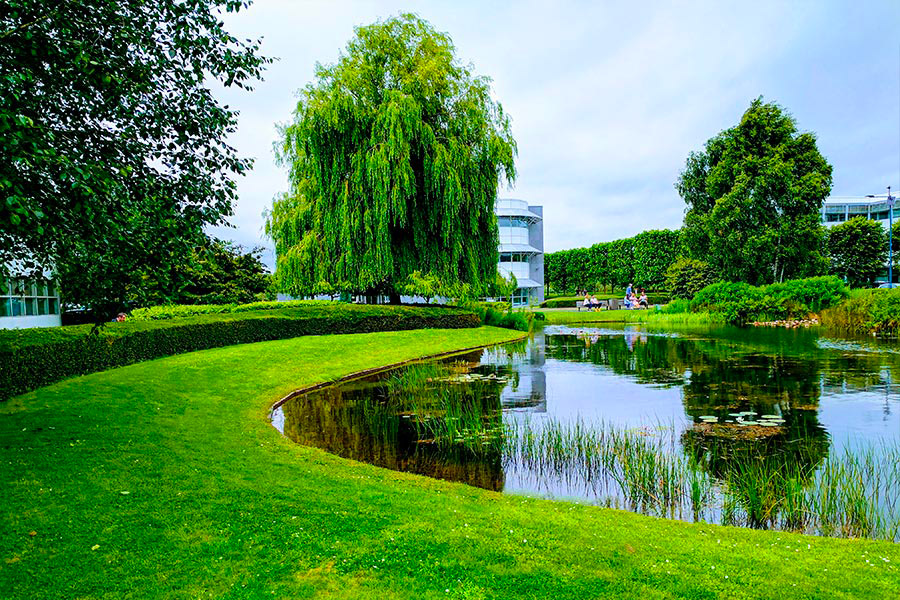
- Create new habitats by developing biodiversity-dedicated areas: wetlands (ponds, basins, etc.), flower meadows, etc.
- Preserve natural shelters (dead trees, hedges, stone walls, etc.) and install artificial shelters like birdhouses, water fountains, and insect hotels.
4. Opt for Differentiated Management of Green Spaces
Adopt a reasoned approach to the management of your green spaces and give nature its rightful place. This method involves adjusting the maintenance of each space according to its function. By doing so, you promote more spontaneous nature in certain areas of your site, such as by practicing late mowing, letting grass and wildflowers grow, and reducing pesticide use.
Differentiated management thus helps in the creation of new ecological zones and the restoration of ecosystems. Moreover, it is economically advantageous.
5. Engage Your Employees and Clients
Communicate your biodiversity initiatives to your clients and employees. By involving all stakeholders (local authorities, employees, target public, etc.), you not only create engagement with your company but also raise awareness about possible actions. The involvement of everyone is necessary to ensure the success of your sustainable development policy.
E-BIOM, Your Partner Specialized in Biodiversity
Biodiversity is our best ally in helping us increase our resilience to future challenges, including climate change. Since 2019, E-BIOM has been supporting companies in developing an objective and sustainable biodiversity policy.
We assist you in conducting an initial diagnosis of the fauna and flora on and around your site, analysing its integration into the ecological network. This preliminary analysis enables us to establish biodiversity indicators and propose concrete actions to preserve and enhance biodiversity on your site. An objective monitoring can then be carried out to highlight the positive impacts of the actions taken and thus improve your biodiversity indicators.