
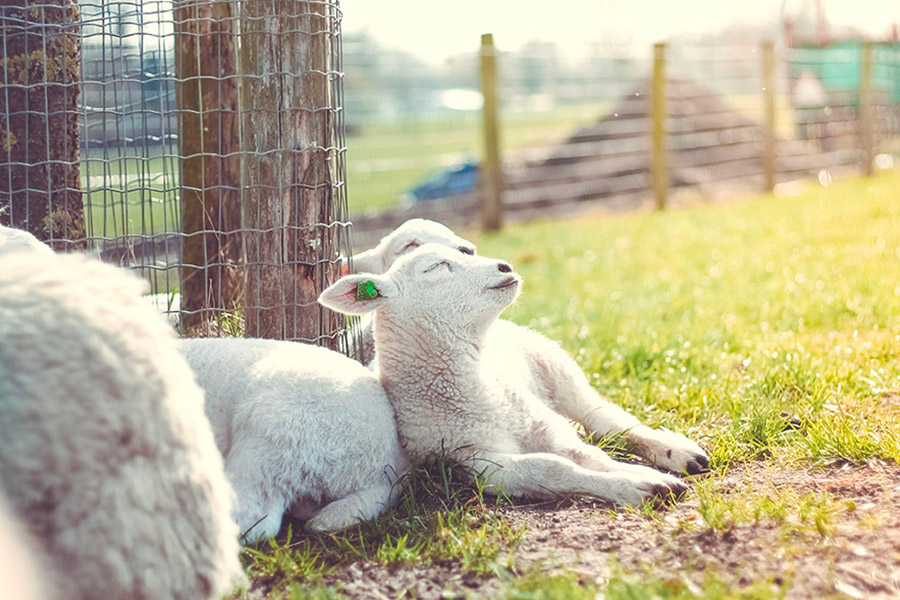
In cities or in companies, eco-grazing contributes to the differentiated management of green spaces, such as grasslands, wastelands, orchards, or riverbanks. Through this article, our scientific expertise laboratory helps you understand the ins and outs of this approach, which is beneficial for biodiversity and its conservation.

Eco-grazing: Definition
Eco-grazing or eco-pastoralism is an ecological alternative to mechanical and phytosanitary management of green spaces. This traditional practice, known as extensive grazing, involves allowing herbivorous animals (such as cows, sheep, goats, etc.) to graze, based on several key principles.
Principles of Eco-grazing
- Reduced livestock load: To promote biodiversity, the number of animals is limited. It depends on the land size, the chosen species, their nutritional needs, the grazing period, and the management objectives concerning vegetation.
- Prohibition of phytosanitary products: For the animal health and environmental reasons, pesticides (whether herbicides or insecticides) are excluded.
- Limited use of medications: Animals are treated as naturally as possible to avoid medication components ending up in the soil through their droppings, which could impact water quality and small wildlife (such as insects).
- Protection of riverbanks: If animals are grazing near a watercourse, either species that do not damage the banks are chosen, or the land is fenced.
Choosing the Breed: Towards Local and Hardy Species
Eco-grazing suits many breeds. It’s possible to work with cows, horses, donkeys, sheep, goats, geese, ducks, and even chickens.
However, hardy breeds are typically preferred. These breeds are more resistant, require less care, and adapt easily to less favourable living conditions (rocky soils, unappetizing food, etc.). They are perfect for difficult-to-access areas, such as sloped ground.
The Many Benefits of Eco-Grazing
While this ecological approach is certainly beneficial for the environment, it also offers economic and social advantages that should not be overlooked.
Environmental Benefits
Maintaining a green space through grazing is primarily an environmental effort. It promotes:
- Maintaining open environments: By grazing and trampling, animals prevent the growth of shrubs and the closure of the space.
- Flora diversification: Instead of indiscriminately mowing everything, animals select vegetation based on their food preferences, thus promoting greater diversity in local flora. This, in turn, attracts more pollinators. Additionally, it helps regulate invasive plant species.
- Conservation of biodiversity and ecosystems: Grazing is often used to manage semi-natural environments like meadows and grasslands with high biological value. It also helps preserve local hardy breeds that are part of our historical and pastoral heritage.
- Carbon footprint reduction: Despite the methane emissions typically associated with cattle, using animals instead of noisy, polluting mechanical equipment is still beneficial for reducing CO2 emissions. By encouraging plant diversity, grazing helps store greenhouse gases (GHGs).
Economic Benefits
The investment required for eco-grazing (care of animals, enclosures, shelters, possible subcontracting companies, etc.) is generally quickly recouped compared to the costs of machines and labour needed to maintain green spaces.
Beyond the financial savings, this solution also saves time. In the city as in a company, the site manager no longer has to worry about maintenance, as the animals handle most of the work.
Social Benefits
Animals allow us to create social bond. In cities, they attract interest from local residents and children, evoking the calmness of the countryside. In companies, employees can gather around the enclosure during breaks.
In both cases, eco-grazing conveys a positive image of environmental responsibility to a public that generally appreciates these “greener” initiatives. In this sense, it also plays an didactic and awareness-raising role.
Focus on Eco-Grazing in Companies
Are you a company interested in implementing an eco-grazing project on your site? Several key points need to be carefully considered before embarking on this adventure.
Defining Your Project: The Steps to Follow
What are your vegetation goals? Which breed is best suited for this? How many animals should your herd have? How will you secure the land?
The questions to ask before starting eco-grazing are numerous. They often require the intervention of an expert company. Such a company will help you at different stages to develop a sustainable and coherent project for both the environment and your company. This assistance includes the following steps:
- Defining your goals: Why do you want to use grazing herbivores? Possible goals include mowing a tall, tender grass patch or clearing an inaccessible area of your site.
- Analyzing your plot: Its soil type (dry, wet, rocky, etc.), vegetation, size, existing infrastructure (shelters, water points, fences), etc.
- Creating a plan tailored to your needs and green space: Choosing the species, defining the maximum livestock load, selecting grazing seasons, adding infrastructure if needed, estimating costs, and choosing a partner.
Options for Integrating this Practice into Your Company
Once the theory is defined, there are various ways to implement it: you can either manage the project yourself, establish a partnership, or hire a subcontracting company.
- Complete management of your grazing area: You buy the animals, manage them, care for them, and create the necessary infrastructure. While economical, this option requires particular skills and a significant investment of your time.
- Partnership: You collaborate with a local farmer. You make your land available, and in exchange, the farmer takes care of the animals and their care. This is a “win-win” situation. However, for both parties’ security, it’s essential to sign a legal and technical agreement with the farmer.
- Subcontracting: There are specialized eco-grazing companies that fully manage your project, from its inception to daily management. This turnkey solution involves higher costs but provides undeniable expertise and peace of mind.
E-BIOM, Specialist in Green Business Strategies
Our scientific experts help companies in integrating biodiversity into their strategy. Through a precise analysis of your site, we propose various actions and support you in implementing them. We also think at a strategic level, advising you on developing your CSR.